Pages

Monday, 18 March 2013

Time management Selling -Right time -Right place - The art of time & territory mangement

"Procrastination is the thief of time",  professional salepeople need to be ruthless with their time but generous with people.

Relationship building requires an element of 'chatting' and small talk but we need to keep it under control.

I wonder how many hours though will be spent talking about Wales' demolition of England in the Rugby, the Australian Grand Prix F1 , Lampard scoring his 200th goal for Chelsea. this morning, -- perhaps more than is really needed ?!
 
Maybe this issue is less of a worry for those in  desk based sales these days but there are still plenty of professionals in selling expected to get out there and meet customers, press the flesh and 'knock on doors'.
 ( This slide came from some research years ago when there were more salespeople 'on the road' but for those still involved in field selling they might prove interesting.)
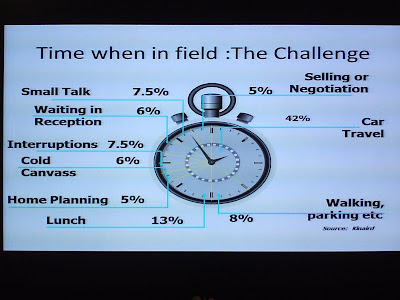
It got me thinking again about making best use of time.

How much time do we have available to us in selling?
Here is a typical example of a delegate's calculation I see on courses.

You could well have even less time than this example if you have over 20 days holiday entitlement, more time on administration, processing emails or longer periods of technical, product training and sales skills training etc.

Part A - How days many days available for field selling?
Total number of days available = 365 days

Less weekends .......................................................104
Less annual holidays............................................... 20
Less bank holidays..................................................... 8  
Less training days ......................................................5
Less trade days ( Exhibitions, shows etc.) ...............10
Less conference days , sales meetings .......................3
Less sick days .............................................................4
Allow for Planning Days (1 per month)................... 12
Allow for ?
Total........................................................minimum.200 days

Net time available (200 days x 8 hour day) ...............1,600 hours

Part B
Time usage per day:

Travelling ...................................................................3 hours
Waiting for meetings .................................................2 hours
Administration...........................................................1/2 hour
Emails ........................................................................1/2 hour
Other
(@ hours per day x net available)

Part B How much time available for face to face selling?

Part B total time spent - ................................................6 hours
Total hours available to sell face to face........................2 hours

Total time available (Part A - Part B) per year 2 X 200 400 hours

Available time by year in days represents just 50 days. Or to put it another way 13% of the year is available for face to face selling.

Journey Planning for the many who still have to travel- "Road warriors".

Sat-nav may have made the skill of map reading redundant, but journey planning skills were only ever part of the skill of sales territory management. To manage a geographical sales territory you need a map to get the big picture into your head.


To be fully cost effective field salespeople need to maximise total face-to-face selling time (or phone contact time where this is an alternative).

With the rise of Selling 2.0 more selling is done from a desk base whether from home office or at a conventional office. However in many sales processes there is still a point where face to face meetings and presentations have a critical contribution to the process.

This means minimising travelling time and unproductive or wasted time, and ensuring that you are spending your face-to-face selling time productively.


QUALIFYING CLIENTS AND PROSPECTS

One approach is to allocate the number of calls and the amount of time devoted to your clients and prospects in direct proportion to their actual or potential business volume. One popular grading system is


- A : large clients/prospects

- B : medium clients/prospects

- C : small but expanding

- D : small but diminishing.


Ensure that the A's and B's receive most of your attention but that the C's and D's are not completely neglected. Remember that the total time you devote is made up of the NUMBER OF CONTACTS and the AVERAGE DURATION of those contacts.

You must also spend your time with the right people, who can either be DECISION MAKERS or DECISION INFLUENCERS or a combination of the two. Do not waste much time with those who have neither authority nor influence, but equally you must never make enemies of them by ignoring them completely.

Deciding how much time to spend on each client or prospect is the first step.

Then you have to decide how and where to contact them. Contact by telephone and/or mail is never as good as a personal visit. But it is better than nothing and can be a cost effective way of cutting down the total amount of personal selling time needed, especially with C's and D's. But you need a good territory planning technique for fitting in as many personal calls as possible, and also leaving you enough flexibility to respond to urgent requests. Because territories differ so much in size, layout and client density there is no single technique that works for everyone - you have to work out one that suits your circumstances.


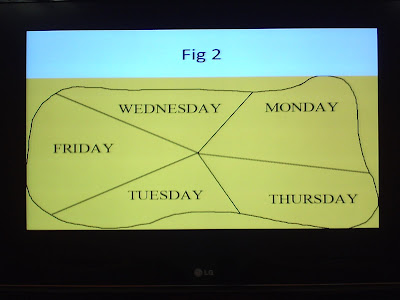
One good basis for a plan is to sub-divide your territory into five separate segments allowing for client density, client grades, distances and travel times from your base. Aim to equalise your daily work load rather than equalising geographical areas. You can then set up a simple weekly cycle such as one of those shown in in Fig 2 below.


A more sophisticated four-weekly rotating call pattern is shown in Figure 3.


Sub-divide each segment into individual journeys. Each sub-segment will contain one day's work so that, in a four-weekly rotation, the call pattern could be as in Figure 3.
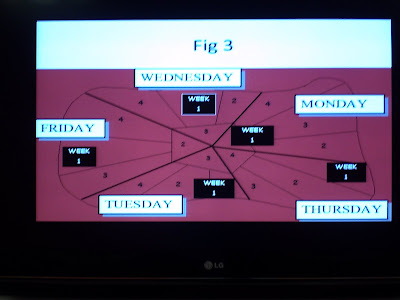
This uses the same concept as 1 and 2 so that calling back on good prospects or customers is made more feasible.

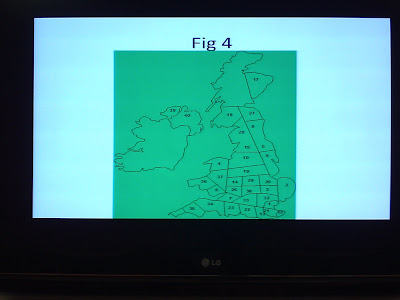
For a larger territory with varying concentrations of clients or prospects, you can use the sort of pattern shown in Figure 4 which shows how the method can be applied to a large territory with varying concentrations of customers/prospects.


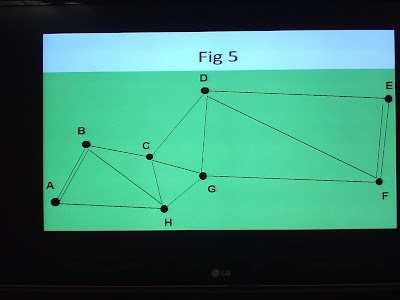
Save time by efficient journey planning. Try to use the "petal" approach in your daily route planning as per the solid line in Figure 5 rather than the "out and back" approach as shown by the dotted line.


Other techniques for saving time, or using it more efficiently, are

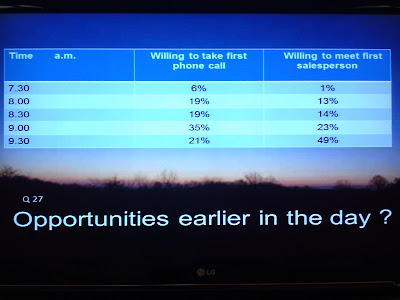
- make your first call earlier


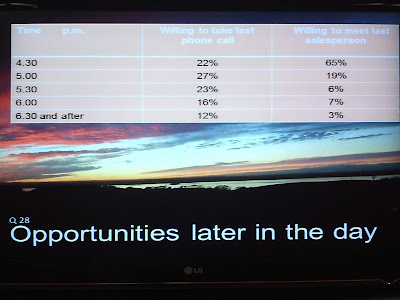
- make your last call later
- have the right equipment in your car and at home for keeping your paperwork, records, sales
aid, etc well organised

- always have with you some "time fillers" -
short or easy jobs which can be done in time periods that might otherwise be wasted (eg long delays in reception, cancelled appointments, arriving at client's premises too early)

- fill up your petrol tank at the end of each day

- have details of contingency calls with you in case an appointment is broken or takes less
time

- use motorways - more miles but less time
travelling

- try to group calls in one area per day and do
multiple calls in one location where
appropriate

- make more use of the mobile to chase orders
and handle queries

- carry maps ( don't just rely on Sat nav) and common sense maintenance items such as de-icer, tool-kit.

Every little bit of time saved on non-productive activities gives an increase in potential face-to-face selling time

Monday, 11 March 2013

When is enough , enough ? Selling Persistence or Selling nuisance calls


"Perseverance is a great element of success. if you only knock long enough and loud enough at the gate, you are sure to wake up somebody." 
 
Henry Wadsworth Longfellow 1807-1872 Poet

Longfellow perhaps did not appreciate how persistent ‘knocking’ would become automated in the world of the silent telephone call marketing approach of today. These computerised diallers ring a householder’s number and are then designed to connect a member of staff in the call centre when the equipment registers that it has been answered by a person.

However, if no operator is available no one answers, this causes silence at the other end of the line. Some play a message apologising for the call, others simply hang up.

The growth of such marketing calls was reported by Jason Lewis, Investigations editor of the Telegraph a few days ago.
 It is estimated  following a survey  commissioned by the Sunday Telegraph to 20,000 homes where a trueCall answering unit was fitted to record the number of incoming calls. The story was also reported in the Daily Mail and elsewhere.
To the 20,000 homes with the trueCall machinery the figures make interesting reading

892 calls from Npower

1,038 from Homeserve

10,396 from talkTalk

British Gas was among the most prolific callers, the results showed.

It made 7,000 cold calls to 900 homes over the course of a year, almost eight calls to each household that’s an average of over 7 calls to each home.

 Rules on unsolicited sales calls are set by the regulator Ofcom, which has fined companies for making silent calls, but has not named companies which made them.

Whilst the automated silent calling firms are proliferating it makes the business of prospecting of well intentioned salespeople all the more difficult.
Persistence is an important aspect of any sales professional attitude set. Rejection is part of the job. In days gone by the following figures were quoted:-
Don’t give up!

Success is never final and failure is seldom fatal


How soon do you give up?


44% give up after the first rejection


22% give up after the second rejection


14% give up after the
third rejection


12% give up after the
fourth rejection


In summary 92% of all salespeople give up after No sales on the fourth call Yet 60 % of customers say 'No' four times before saying “Yes”!

But that was in an old world of humans dialling out and 'road warriors' - perhaps with the new world order of automated silent call methods customers will be even more resistant

Come what may, professional selling is not about being a nuisance - rather it requires one to be  polite , courteous but persistent.


Related Links

  Jason Lewis blog

Alun Cairns, a Conservative MP has rased concern on this issue with particular reference tovulnerable receivers of such calls as the elderley.

Liberal Democrat MP Mike Crockart, is setting up a House of Commons all-party committee on nuisance calls  http://www.no2nuisancecalls.net/4

Answering Selling Objections 8 stage process

Answering objections -

Few sales are concluded without one or more objections being raised at some stage of the presentation and discussion.

Meeting objections can be like banging your head against a brick wall.


 (Brick wall in Bury Road , Rickmansworth)


Like a wall you can choose to go round it, over it or through it.


Walls like objections are individual.
The very best way of dealing with objections is to Pre-empt them. (e.g. “You may be aware that EHI Roller Bearings are one of the premium providers of this type of product, yet are number one in the industry. Our customers get more value out of the product and I’d like to illustrate where that extra value exists…”)

Actually facing the fact that there are certain potential objections and bringing them up yourself, providing the answers at the same time will prevent them appearing later on.

Only do this if you are reasonably sure that the client will think of them - otherwise you are drawing attention to something which might never have presented a problem anyway.

There are two kinds of objection:
• Information seeking and
• Major.


It is important for us to clear the smoke screens away to give ourselves the best chance of handling the real objection. Our natural reaction is often to try to squash the objection before it gets out of hand which can lead to the following problems:

Pouncing: a knee jerk response (sometimes even before the prospect has finished speaking!) is discourteous and creates an emotional brick wall - it suggests you have not considered what has been said and that you are not concerned for the client’s point of view.

Being glib: too practised and rapid a reply will be viewed as suspect and unconvincing - it suggests you have heard it all before and are just repeating a page in your sales manual.

Arguing: the time honoured response “yes, but” suggests that you disagree just as much as

 “... Don’t agree with you ...”,

 “... No that’s not right and here’s why...” or anything similar.


 Avoid even suggesting that you disagree by shaking your head or raising an eyebrow.

Scoring points: drowning a prospect in technical detail, or proving that they do not understand or have made a mistake, will simply make them feel foolish and/or angry.

Understanding the concern that lies behind the objection is essential if you are going to deal with it effectively; therefore listening and clarifying are vital at this point.

Furthermore, any emotion needs to be removed from the situation, as logic cannot sway emotion.

Establish a clear understanding of their position , use silence to gather more information and clarifyi by paraphrasing and repeating the objection
.

For those looking for a process  here is a logical 8 step method

How to address an objection

1.Listen
-

and show that you are listening.

2.Pause -


to show that you are considering the point.


3.Clarify -

ensure that you understand, and demonstrate
that you understand, by questioning, summarising, rephrasing or repeating.


4.Appreciate -
by acknowledging the customer’s viewpoint, express empathy, and confirm understanding of the customer’s concerns.

5.Evaluate -
whether the objection is ‘information seeking’ or a misunderstanding, or is it a ‘major objection’ based on valid points?


then either
6a.Explain -
if the objection is ‘information seeking’ then provide more information (making sure that you assume the blame for inadequate explanation)


or
6b.Hinge -
if it is a valid ‘major objection’ then use a phrase such as “However”, “On the other hand”, “Alternatively”, “Have you considered…”;
or turn the objection into a question


and
7.Justify -
by using Benefits and ‘YOU’ Appeal to neutralise and outweigh the objection and motivate the customer.


and finally
8.Commit -

if appropriate, confirm that the customer is in agreement with your answer before moving on (to the close).


(NB: Testimonials - If you have customers who are loyal to your company, then get letters of referral/testimonials from them. It can help you justify the price.)


Special categories of objections

You must establish whether the objection is valid, or purely a misconception so that you can provide relevant information, explanation and justification in a logical, credible and motivational fashion, drawing on the most appropriate points of your Offer Analysis.

There are three common types of objection which require special consideration:

 .
  
Hidden objections: sometime the objection voiced (e.g. “I haven’t got the budget”) is easier for a client to say than the true objection (e.g. “I haven’t got the authority”).

Quite often you can sense thsi from their body language

 If this seems to be the case then answer the objection raised and follow up with “...and what are the other points that concern you?” Or equivalent expression

Delay objections:

These can also cover a hidden objection and are intended to avoid an immediate decision

for example :-

 
 "I need my boss’s OK on this"
 
"Leave it with me"
 
"I’d like to think it over"


Referral to a third party (e.g. a boss,  acolleague, the board) can be dealt with by:

• Confirming your contact’s acceptance of your offer
• Involving your contact in the next stage
• Seeing the third party yourself (preferably with your contact)

Anyone needing to ‘think it over’ is not fully convinced of the benefits.

Try to confirm their ‘area of particular concern’; use a summary to check all relevant points. If that does not work make sure you arrange a follow-up meeting.

Competitor comparison is best handled by focusing on the total cost of the purchase for the client (i.e. purchase price + cost of time + installation costs + overheads etc) as this puts price into a smaller perspective:

or identifying the cost difference between you and your competitors (this gives you a much smaller amount to justify) explaining how your total offer differs from your competitors, and showing that the value difference to your client is greater than the cost difference.

Comparison with not purchasing at all is best handled by reducing the price to the lowest denominator that is appropriate to your client (e.g. amount per day, amount per person, extra cost per unit, the equivalent of only one extra tank of petrol per week);

 this makes it psychologically more acceptable.

 Another way is by repeating your major benefits in a way that shows the client that the value of your offer is greater than its price.


Price objections:
 
"Too expensive"
 
"More expensive than"

Establish  first whether the price is unacceptable in comparison with a competitor or in comparison with simply not buying at all.


When faced with the price objection use the phrase “Can you help me understand more about the prices issue” or “Can you clarify this for me…” or “Can you expand on this for me?”


Think back to the answers you got from the customer during your earlier questioning and pick up on the issues raised by the customer - for example “Earlier you said reliability was your biggest issue…” or “You mentioned earlier that quality was of major concern…”. Then move into a defence of the value of your offer - build a bridge of Benefits and ‘YOU’ Appeals that illustrate how the customer is going to get extra value from doing business with your company.

 Your Offer Analysis  or Differentiated value Proposition DVP provides the raw material for your answer to the objection.

Nudge the buyer into a decision by using a phrase like, “Wouldn’t you agree it’s worth the extra £5 per unit ?

Useful phrasing for common objections

Here are some possible approaches to handling common objections. Adapt the format and language to suit your personal style.

Objection: “I’ve got a cheaper quotation/proposal.”

Approach No 1 - ask to see the competitor's proposal to check that the buyer is comparing ‘like for like’.

Possible phrasing could be “I do understand that the price is very important. So that I can understand how they have been able to quote a lower price on a similar specification what I’d like to do is look at their proposal to satisfy myself that you wouldn’t be getting a specification that is different from ours. Do you have a copy of their quotation handy?”

If your prospect declines to show you the proposal use Approach No 2 -

“I understand. Can you help me with this Mike? What I’d like to do is go through our specification with you and you can check it against their proposal. We can then highlight where the differences are in the specification. Do you have a copy of their proposal handy?”


Objection: “I’m happy with my current supplier.”

Response: “I quite understand how you feel Jill, some of our existing customers felt the same way before they started using our service, what they found once they began using Xeron products was that …….”

(Continue with a summary of your key benefits and ‘YOU’ Appeals.)

“……. So that you are in a good position to evaluate our service what I’d like to suggest is that you use us on a trial basis. We could start the trial in late August or early September. Can we go ahead on that basis?”

(This approach expresses an understanding of the prospects viewpoint, offers a way forward and attempts a close on your objective.)


Objection: “Can’t see added value for the price.”

When the customer objects because your specification seems the same as your competitors, then you have to differentiate yourself and add value against the competitor.

For example:

“I can fully understand your concern Mr Jessop and at this moment we do look more expensive than the other supplier you are talking to. From what you have told me there appears to be a £4 difference per shipment.” (Reducing the difference to the lowest unit.)

“Your main concern when shipping your spare parts around Europe is that they arrive on time, that you have the latest pickup times and have the ability to track and trace each shipment en route.” (Gain commitment here.)

" Europe Parcel Couriers  have a full European network. We have more flexibility around pick up and delivery times, we provide excellent security and our
track 'n' trace  system  allows  for greater visibility of shipments. This is where you get the added value which does cost a little extra, but it does give you added benefits, which are most important to you. Wouldn’t you agree?”


Objection: “I need to speak to my director/manager etc.”

Response: “I can quite understand that you need to consult your Director, it’s a big investment after all, but can I ask you Sam ? if it was solely your decision would you be happy to go ahead today?”

(If the prospect hesitates in their response you need to probe the reason for their reluctance to give a clear answer. The hesitation may mask a hidden objection. In effect the prospect may be saying, “leave it with me”.)


Objection: “Leave it with me, I’ll think about it and get back to you.”

Response: (Stage one) “That’s fine George, it is a major decision. Sometimes when clients ask me to leave it with them, in the back of their mind they still have a concern, could I ask you was that over the specification or the performance?”

(Pick two of your key propositions, but not price as the prospect can always respond by saying “yes, the price is too high”. This approach may reveal the real reason for the delay. It’s possible that the prospect’s response may be to simply restate the original objection.)

For example: “No, I just need time to think about it.” (A very understandable human reaction.)

Stage two is carefully phrased to identify exactly what your chances are of winning the business.

“That’s fine Paul, I’ll wait to hear from you, but would you mind me asking, what if anything, would stop you giving us the business?”


5-of-the-most-common-sales-objections


Sunday, 10 March 2013

Aleksandr Orlov at world premiere in Oxford


Mr. Hugh has weekendings off , so  I Alekandr Orlov  meerkat  blogger is guest editors .
I, Aleksandr Orlov visits Oxford  and Exeters College and witnesses world premiere music piece. Exeters livesly college is in middle of Oxford. Woulds be difficult to be more centrals. Exeters exquisite Chapel, tranquil Fellow Gardens and terraces overlookings famous beautiful Square Radcliffe and its famous Camera very historicals.
Left: Alexandr recreating famous scene
 from detective Morse Code
Right: At oldest Coffee House in England
 after Evensong at Exeter College , Oxford
The College is livings history with formers students Tolkien famous author or Ring of  Lords long book and epics films , JRTwas undergraduate here, as was History Boy Alan Bennett,   Martin Amis, and  Dark materials author Philip Pullman another Exonians.

Also fictions based Jordan College on Exeters.  Inspector Morse Code collapsed on the lawn grasses in  front quad. See my heroic enactent on identicals lawn left picture.

From websites blurbs I read Exeters celebrate diversities but I see no Meerkat portraits on Dining Room wall,  I see just men in batsuit gownses.

As would expects from a small, close-knitting College, there is  carings atmosphere, where people looks out for each others. With such a supportive and buoyant atmospheres at Exeter, College life is great fun and hugely sociables.

They were all in onesies from Primark store , 'letting hairs down 'partying end of term day last Friday 9th March 2013

Right: Alekandr checking out organ
 in Exeter College Chapel
Right: Singing with All Saints Church Fulham
 Choir, in Exeter College Chapel
Peoples may not know  my hiding talents is singings. So I join wondefuls Fulhams All Saint Church choir. You see their famously old church tower at start of each boat race each year on televisions. (Tower and Belling in need of repair. Good cause to support !)
At Exeter College we sings world premiere of Jonathan Wikeley introit anthem “ My Lord is alone ” in College Chapel, very movings music.
 
We also see gloriousness ‘Mag's’ and ‘Nunc's’ of Stanford in sea . To make up for lack of sea in Oxford we have Rev Penny Brook of sea preside over service of Songs of evening. She very nice reverend.
Chapel very boomings acoustic remind me of my palace bathroom in Meerkova which I love to sings in while Sergei scratch my back with softy Loofa and scented soaps.
After I celebrate songs of evening with choir, I go for refreshings coffee in Oldest Coffee house in England but they not knowings of crushed beetle coffee with sprinklings of earwigs so I settle for cappucinos.


Alekandr admires wonderful painting
at the Ashmolean Musueum, Oxford
From theres then I go to Museum Ashmole moley museum to see famous perspective huntings painting by Ucello with its amazings perspecticles.
Oxford wonderful city to sightseeings in and great privileges to sing in especially with Maestros’ Wikeley music and All Saints Fulham Choir.

Old tower 1432  in Exeter College, Oxford
 

Monday, 4 March 2013

5 methods of obtaining , sustaining and regaining Attention in Selling

Coco Chanel of the famous Paris perfume house , who knew a thing or to about making great first impressions is said to have said

" You don't get a second chance to make a first impression."

But today we have far less time to make that impression.


Consumers in the era of Facebook, YouTube  and twitter know within a couple of seconds if they like something. The absorption of information is so fast nowadays it is astonishing.

One of the ways of getting noticed is to change the standard unit of consumption, that unit is 30 seconds in the TV commercial and it” is boring "  according to Trevor Beattie.


Trevor Beattie has been behind some of the UK's most famous TV ads including Wonderbra's 'Hello Boys' and French Connection's FCUK. He claimed that modern technology has killed the 30-second TV commercial at Advertising week Europe 2013  proclaiming the death of the 30 second commercial.

Likewise getting off to a good  and quick start gives a salesperson confidence to do a good job for their client.

Every sales call, whether repeat or first time, should open in a way which gains the client’s full and undivided attention and directs the conversation towards your specific call objective(s).


It’s important to build initial rapport, which lays a foundation for the relationship so a short ‘chat gap’ will often (but not always) be appropriate, but do keep it short and do make it a rule to talk about the client and his/her organisation rather than you and yours, and do more listening than talking.


You should open with a purpose statement that explains the reason for your call,

e.g. “The purpose of my call is to find out more about XYZ Products and share with you the benefits of working with us”-


now link your purpose statement to one of the following attention getting techniques.


The main techniques
There are four principal methods, plus a fifth for repeat calls:


Factual opening: state an interesting fact which relates to either the client personally or his business; the fact will also usually relate to your product/service, either directly or indirectly.


e.g. “One of the main concerns today for people approaching retirement is what inflation will do to their pensions.”


Question opening: ask a question which is relevant to the client’s business and also to the purpose of your call.


e.g.“What are the main problems you encounter in making sure your exported components arrive safe and undamaged?”


Reference opening: build confidence and interest by referring to the experience and satisfaction of another client; either a well respected client (confidence) or a client in a related business (interest).


e.g. “South Midlands Borough Council now uses us exclusively and I feel sure that you will want to consider whether you too can benefit from our service. Let me tell you about it.”


Sales aid opening: involve as many of the client’s five senses as possible by using a brochure, photograph, working model, sample etc.


e.g. “… as you can see from this electronic panel, it’s designed for a simple, one touch operation, which means you have less room for operator error.”


Link opening (repeat call only): link this call back to a previous one by summarising where you left off last time.


e.g. “When I last saw you I promised to give some thought to the particular problem you mentioned and now I believe I have a solution.”


The main pitfalls
Guard against the following:


• The wrong location: try to avoid having a meeting in a noisy or distracting environment (e.g. reception area); tactfully suggest that in the client’s interest a different location would be better. Often there will be a quiet area available such as a meeting room, canteen outside main meal times even the board room - often the least occupied room in an office site.


• Excessive time pressure: you should be as concise as possible, but if your prospect really is not concentrating properly because of time pressures then you are better to cut your losses and try for another appointment; but generally prospects who say “I’ve only got a few minutes” are just reminding you to be brief and will usually give you more time if you gain their attention and interest quickly.


• Avoid downgrading the call or sounding like a 'parachute salesperson': openings such as “I was just passing by ...” or “I just thought I’d drop in to say hello ...” neither flatter the client nor gain attention; even ‘courtesy calls’ or ‘goodwill visits’ should have a clear objective and a strong opening.


SUMMARY
Although the most important occasion for the use of the above techniques is early on in the call, remember that each change of direction or change of topic you have to ‘gain attention’ all over again.

They can also be employed after meeting interruptions like phone calls, people coming into the meeting room and other visual or acoustic distractions.

Click for free executive summary of the Buyers Views of salespeople research study

Sunday, 3 March 2013

Selling performance incentives - HSBC's Gulliver Travails through the land of Lilliput of Gold bonuses ,the EU Cap and Diocletian


CEO Stuart Gulliver has earned a great bonus for HSBC’s record performance £14 billion the biggest British bank number since before 2008.


Maybe he will give his bonus up like Barclay’s boss Anthony Jenkins that is entirely up to him.
Well done to all those salespeople who have worked so hard to produce these outstanding results of HSBC.

The fact is that you get the behaviours that you reward.

Performance related pay is not always necessary . However well designed and well supervised schemes can make sense at whatever level the employee is in an organisation.

There has been a substantial restructuring of City pay since the crisis including greater deferral of pay-outs, and the ability to cancel ( or claw back unpaid bonuses if they turned out to be based on unsound transactions. )
 By measuring customer satisfaction, cooling off periods, better procedures and guidelines these past errors  in the main have been rectified.

You might feel however that we need measures such as those 1,712 years ago (more of that later)


A new city landmark
The City has accepted that there were flawed compensation practises in the period leading up to the financial crisis but were the huge bonuses the sole root of the financial crisis ?

You would think so the way that the EU bonus cap could be required to start from 2014.

  Brussels’ attempt at wage controls is an ‘outdated, scandalous, absurd and self-defeating edict which will destroy jobs and reduce tax receipts. ‘ so many of the City writers feel.

By imposing a ratio between salary and bonus, EU lawmakers may force bank to increase base salaries - an unintended consequence.

 For sure sales bonuses enable companies to run bad decisions  more efficiently but the sub-prime lending would have probably happened along the way although probably more slowly had bonuses been 200% of basic pay rather than 400%

Perhaps we forgot rather too quickly that Governments, regulators, central bankers , academics , credit rates, accountants, Bank of England CEOs and bank employees...

 all thought sub-prime were fine, CDOs were fine and very low levels of capital were fine.

Bonuses merely facilitated errors that would have happened in any case.

It is fair to say that they also encouraged criminal actions and fraud – but that was due to a failure of policing and management or the contract design again the responsibility of the management.

Allister Heath,  editor of City AM Newspaper  listed ahead of flawed bonus structure the following :-

1.       Flawed inflation targets that omitted asset prices

2.       Low central bank interest rates

3.       Depressed yields on long term loans caused by global imbalances and savings gluts

4.       Government policies to promote sub-prime lending

5.       Banks’ insufficient capital and liquidity

6.       Absurd Basel rules that incentivised securitisations

7.       Incorrect mathematical models

8.       Useless credit rating agencies

9.       A massive over optimism and collective madness which led to huge but genuine errors of judgement. Too much money was lent too cheaply to far too many dud, usually property based projects; thousands of institutions ended up exposed.

That having been said setting sales targets and incentives for your salespeople is an important area of any business whether it high finance , a bank , an estate agent or a shop.

Sales managers need to set clear targets for their salespeople, linked to incentives such as commissions and bonuses - this motivates them and provides a clear indication of the kind of performance expected of them.

This process is crucial to the success of their business and needs to be closely tied in with the rest of their company’s business strategy and planning.

Being specific when setting targets for sales staff – typically they break their business generation requirements down into three different areas, for example:

• Developing New Business from Prospects - working from the projections in the business plan and sales forecasts - these will take into account changing market and economic conditions.

• Renewals and Growth from Existing Clients – protecting and expanding existing customers.
A typical renewals rate is in the region of 60 to 70 % according to Business Link  July 2011.

• Lapsed customers - a good salesperson should be able to recover some of the company’s past customers who have not bought for some time.

Looking at the business and identifying the factors driving its profitability – Sales managers use these to drive their sales targets as well through tactics of up selling and cross selling.

 Different businesses may require very different targets

Sales managers have to balance between making sure that the targets set for their new sales staff are reasonable for the territory they've been allocated, to making things too easy which may lead to complacency and lost sales, while making them too difficult can be demotivating and lead to lost sales.

Setting activity targets for your salespeople

As well as setting salespeople targets for the number of sales they want them to make, you should also set them activity targets. These include all the individual aspects of their day-to-day duties that their sales team will carry out as part of their jobs - and which should lead to sales.

Activity targets might be ( often included as part of their CRM system):

• Completed phone calls - asking sales staff to record the number of calls they make that are completed with potential customers.

• Face-to-face meetings - getting salespeople to record the number of appointments they make with customers where they attempt a sale.
 
• Leads generated - measuring how effective your staff are at extracting new leads and generating potential new contacts.

• Leads followed up - see how successful and fast your sales staff are at following up sales enquiries generated by your marketing activity.

• Qualified prospects - ask sales staff to let you have the qualified prospects that they have identified. These are people who have been picked out as needing the products or services that you offer and who are able to purchase, but who haven't approached you - or been approached.

This is an important area of the sales process, as continual efforts by the team to to generate new business leads may help keep sales figures steady or on the increase.

Sales managers would do well to monitor this area of their work just as closely as the actual sales figures.

The approach to setting targets by the sales manager respondents to the Business Link survey showed the majority 53%  ( sms 52.7% ) choose to set very clear targets for their team members but leave them to organise how each team member achieves them.

 A further 33% (sms 32.7%) let their sales people set their own targets and work with them to discuss how they will achieve them and whether they should be changed.

13% (12.7% sms) set targets within a higher/lower range and leave the individual to determine what and how they achieve them

. Only 1.8% let their salespeople set their own targets and achieve them in their own way.

Of course you might preer the capping of bonuses like the EU have suggested last week


Boris Johnson the Mayor of London referred to the EU’s bonus capping measure  as


‘..Possibly the most deluded measure to come from Europe since Diocletian tried to fix the price of groceries across the Roman Empire.’


I had to look up on Wikipedia Diocletian’s edict of 301 to see what the Mayor was on about

Remember the 1712 years ago I mentioned at the beginning of this post ?

The Edict of Maximum Prices from Diocletian in 301 was an attempt to control runaway inflation and poverty in the Empire.

 The penalty for exceeding the prices of the Edict was severe: death.

 Not satisfied to execute just the seller, Diocletian decreed that the buyer was to be executed as well!!
 [ Just imagination how the horsemeat scandal would have been dealt with back in 301 !]

 As a final measure, if a seller refused to sell his goods at the stated price, the penalty was death. ( No doubt rebellious and pesky Gauls  back then ignored rulings from the centre much like today :-) !)

The edict did not solve the problem, and Diocletian also flooded the Roman economy with newly minted coins. ( I guess 'DE'  [Diocletian easing!] as opposed to QE )

Since the edict set prices, it actually hurt the economy. By 305, the end of Diocletian's rule, people almost completely disregarded the edict. It was not until Constantine's currency reform that the Roman economy stabilised.

I reckon Diocletian might have felt threatened by Stuart Gulliver's HSBC empire though perhaps Brussels does as well.


Related Links :